
Embryo transfer (ET) is now a widely undertaken technique that involves breeding a ‘donor’ mare to a stallion, then flushing and transferring the resulting embryo to a ‘recipient’ mare who will carry the foal to term and nurse it until weaning.
What does the process involve?
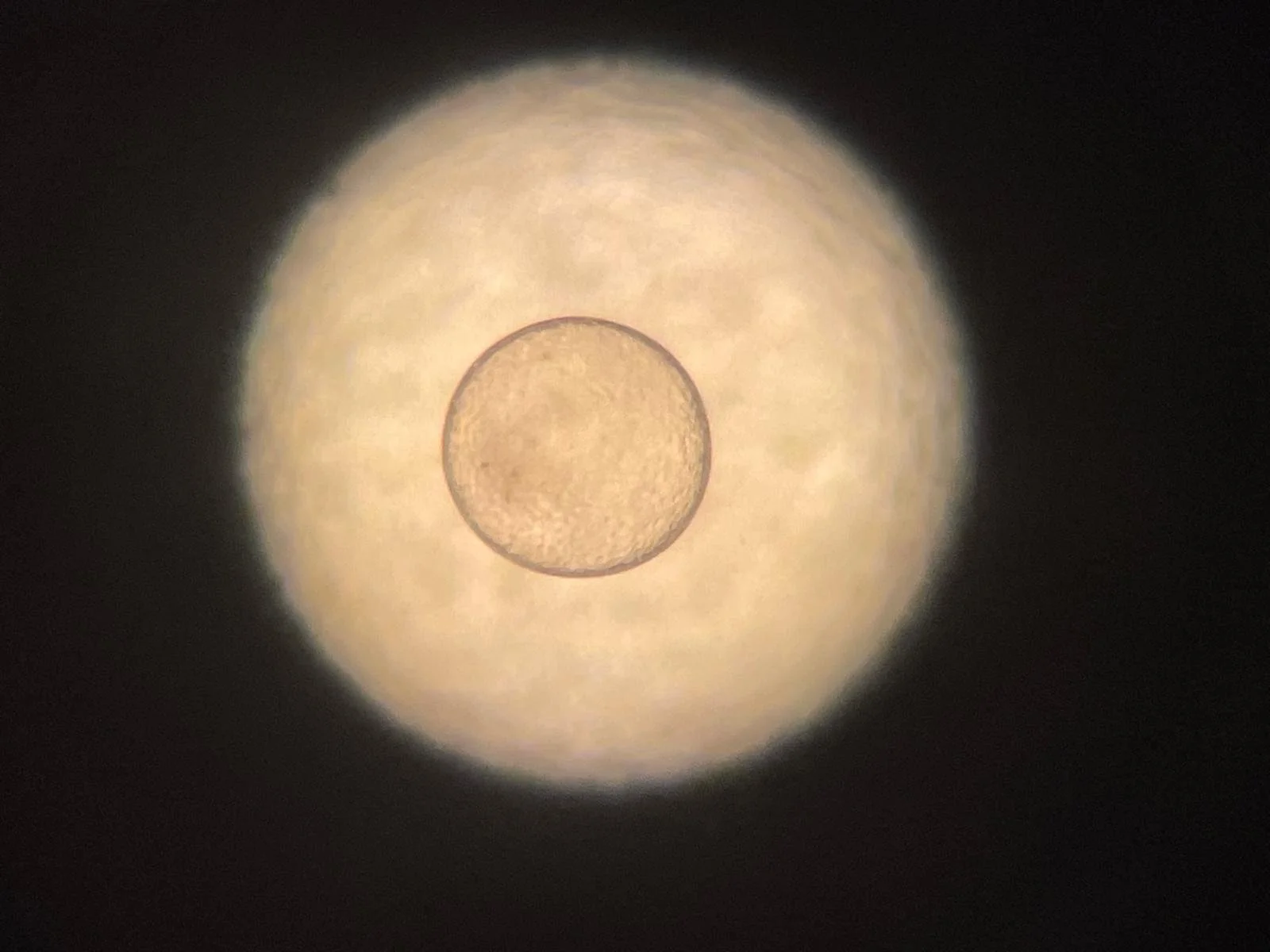
An 8 day old embryo under the microscope
The donor mare is bred as normal with fresh, chilled, or frozen semen. The embryo is then flushed from her uterus on day 7-8 post ovulation and transferred to a recipient mare who’s cycle has been synchronised to make her a suitable candidate. Mares can be tricky to line up, therefore ideally 2+ recipients should be synchronised per donor to increase our chances of the perfect match (and account for more than one embryo being produced- a possibility when there is greater than one ovulation). If there are no potential recipient mares available, the embryo can be transported to an ET centre where recipient herds of specially selected mares are kept, or embryos can be frozen.
The ‘flush’ stage involves a catheter being placed through the donor mare’s cervix and into her uterus. The uterus is filled with flushing media, which is subsequently drained out of the mare through a micro-filter. The contents of the filter can then be examined under a microscope for the presence of an embryo. The mare is usually lightly sedated for this process. If an embryo is found, it is ‘washed’ and either loaded for transfer, or prepared for transport.
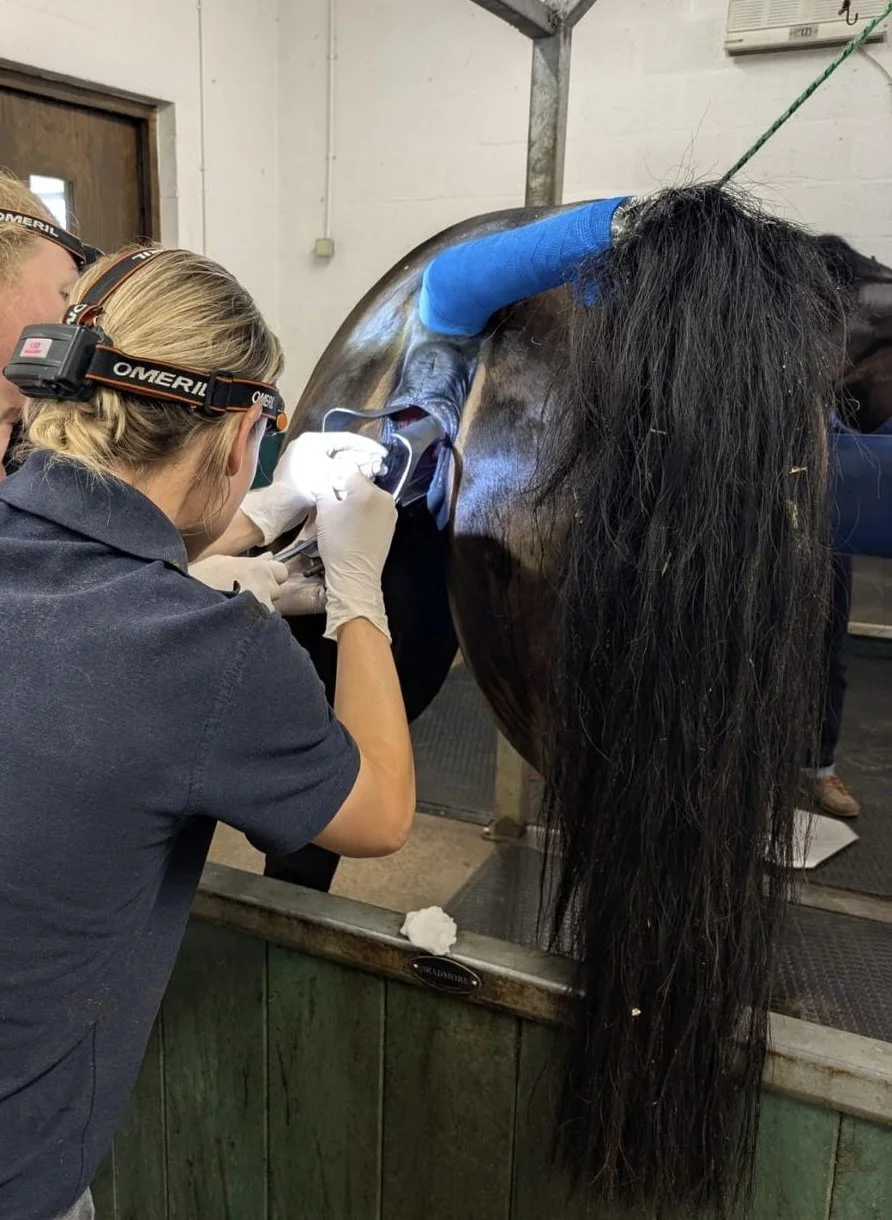
An embryo being transferred into a recipient mare
The ‘transfer’ stage involves the embryo being deposited non-surgically through the closed cervix of a recipient mare, again under light sedation. The recipient mare is scanned when the embryo is 12-14 days old to confirm that the pregnancy has taken. Further follow up scans are usually scheduled to confirm the presence of a heartbeat, and often again after the formation of endometrial cups which are supportive of the pregnancy (after approximately 35-38 days).
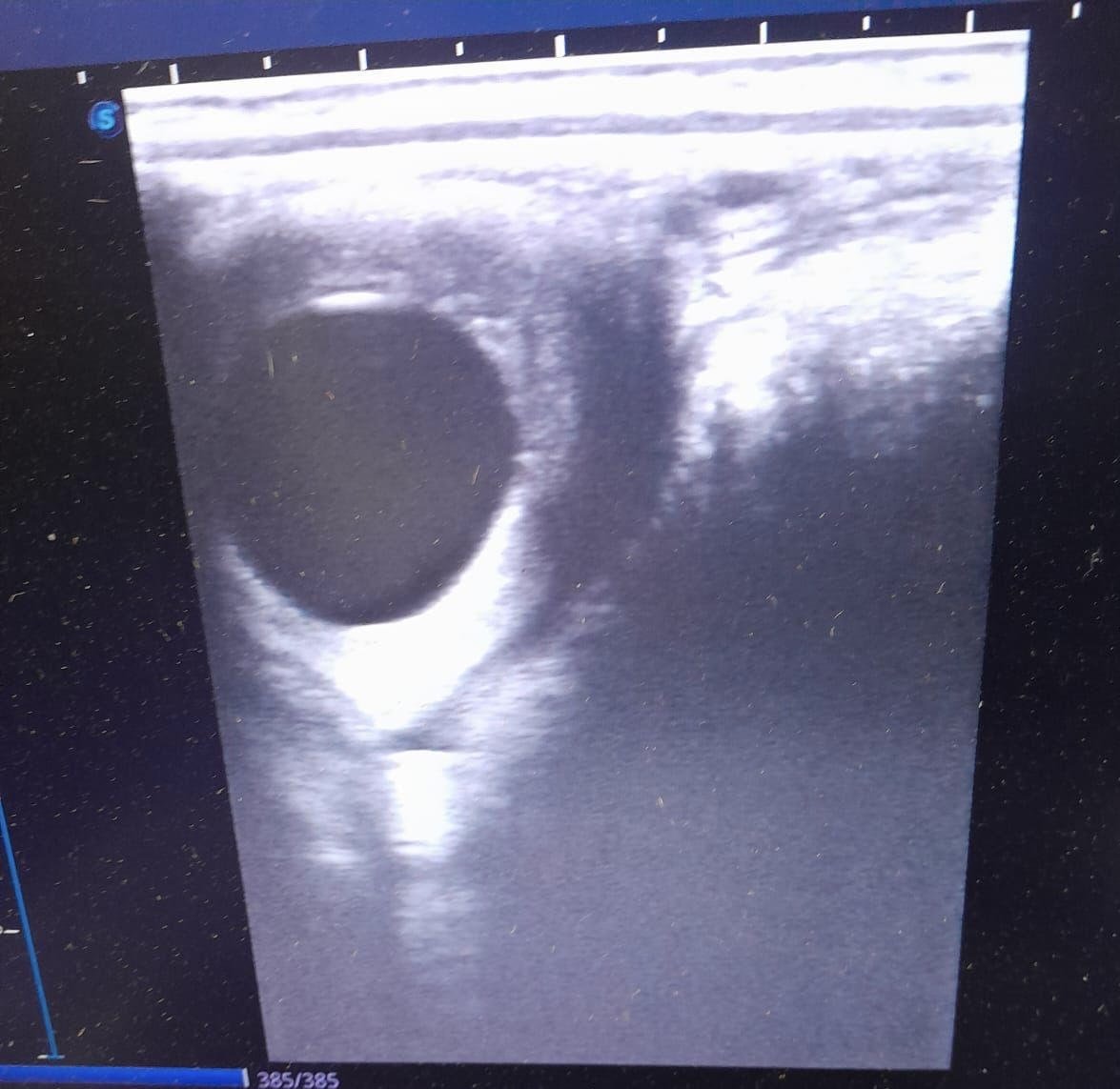
An ultrasound scan of a 15 day embryonic vesicle in a recipient mare following successful embryo transfer
A 30 day pregnancy with a visible heart beat, using the doppler feature on the ultrasound machine to visualise blood flow
What are the advantages?

Competition mares require minimal time out of their training and competitive schedule, allowing them to continue with their career.
Mares can undergo multiple cycles of ET per year, with the potential to produce multiple foals by multiple stallions from a single mare in one breeding season, allowing maximisation of her breeding potential.
In mares that are unable to carry a pregnancy, suffer with sub-fertility, or those with a history of repeated pregnancy loss, ET allows us to breed a foal whilst bypassing many of the mare’s own reproductive/ medical challenges.
What factors can affect success?
Semen Selection:
The highest embryo retrieval rates are seen with fresh semen. This not always an option, with competition schedules, geographical limitations or deceased stallions. Chilled or even frozen semen can also be successfully used. The greater the fertility of the stallion and quality of semen, the greater your chances of a successful flush.
2. Donor Mare Fertility:
Endometritis is a relatively common condition involving inflammation (usually caused by infection) of the lining of the uterus. Mares are screened prior to breeding by either an endometrial swab or low volume lavage sample.
Oocyte (egg) quality in mares decreases with age, and pathology of the uterus or oviducts becomes more common. Fertility begins to decrease in mares at approximately 12 years old, and significant decreases are seen over the age of 18. Early embryonic death following transfer is also higher in embryos obtained from older mares. This does not mean that we cannot undertake the ET process with these mares, but decreased fertility may limit the number of foals produced.
‘Older maiden mares’ commonly have tight cervixes. This can cause issues with fluid retention and uterine inflammation, particularly after insemination. Additionally, mares with previous damage to the structure of the cervix or uterus may face issues with either uterine clearance, or may not be able to form a tight ‘seal’ with the cervix.
Heat, stress and exercise can all affect the process in some way. For example, temperatures greater than thirty degrees have been associated with lower embryo retrieval rates. Additionally, stress can influence the hormones required for mares to produce a dominant follicle and successfully ovulate.
3. Recipient mare selection:
The ideal recipient mare should been in good systemic health and condition. In mares with a reproductive history, this should be known to be excellent, and a thorough reproductive examination should be carried out with no abnormalities found. Recipient mares should be young (ideally 4-10 years), a little larger than the donor mare in size, and have a good temperament. The ideal recipient ovulates two days after the donor mare, but a small window of flexibility around this exists. Immediately prior to transfer, potential recipients are examined to select the best possible candidate based on uterine and cervical tone, absence of uterine fluid or significant oedema, presence and health of corpus luteum, and more general suitability e.g. size
4. Environment:
ET should be undertaken in a clean environment with appropriate facilities including a set of stocks, with a designated clean lab for embryo searching and handling. We would therefore recommend that this process is undertaken at Peasebrook Equine Clinic
If you would like to learn more about Embryo Transfer please call the Clinic on 01386 853884 or call Emma Saric on 07908 592725.